
Donkey Kong Bananza DLC: Unmasking the Nintendo Switch 2’s Latent Performance Achilles’ Heel







Popular Now
 The Legend of Zelda
 Fall Guys
 Poppy Playtime
 God of War Ragnarök
 BeamNG.drive
 Call of Duty
Geometry Dash
Call of Duty
Geometry Dash
 Candy Crush Saga
Garena Free Fire: Kalahari
Candy Crush Saga
Garena Free Fire: Kalahari
 Valorant
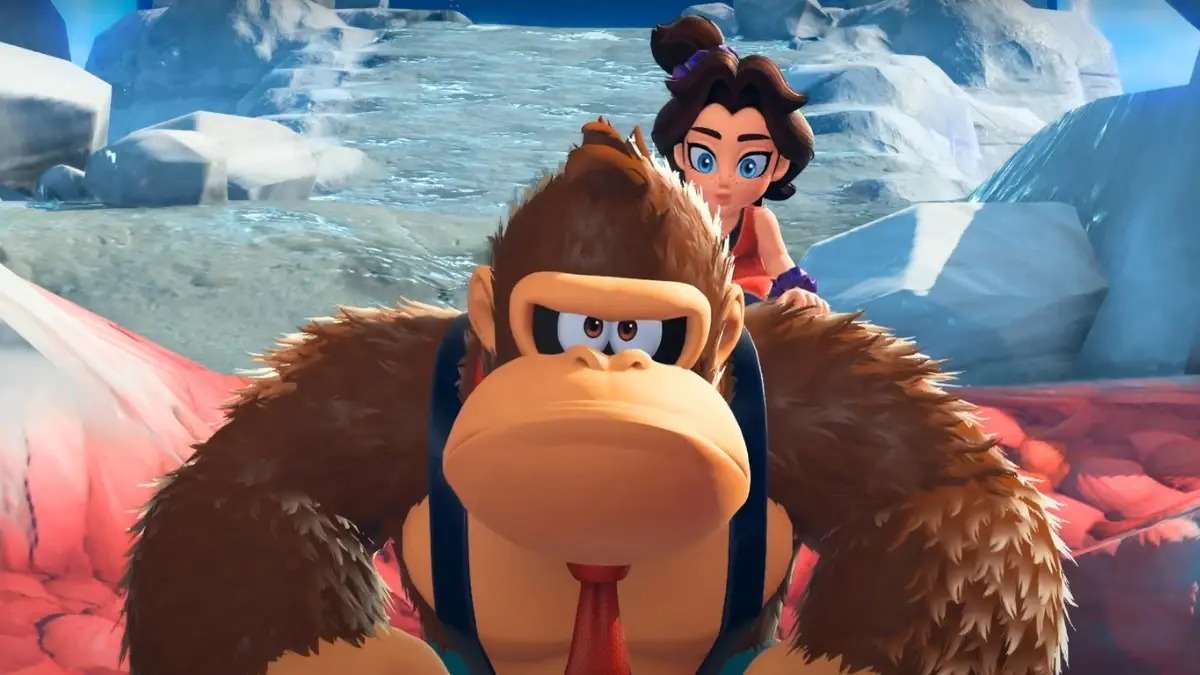
The gaming world is abuzz with the impending release of the Donkey Kong Bananza DLC, a highly anticipated expansion that promises to inject new life into the beloved simian’s universe. Touted as a potential flagship experience or early showcase for the rumored Nintendo Switch 2, this DLC carries immense expectations. However, early impressions and technical analyses, particularly when viewed through the lens of next-generation hardware capabilities, suggest that Bananza might inadvertently reveal a significant, perhaps fatal, flaw in Nintendo’s forthcoming console: a latent performance ceiling that could undermine its competitive stance and long-term appeal in the fiercely contested console gaming market.
For years, Nintendo has masterfully balanced innovative gameplay and unique hardware features with often-modest technical specifications. The original Switch succeeded wildly by prioritizing portability and novel play styles over raw power. With the Switch 2 on the horizon, industry watchers and consumers alike are yearning for a more substantial leap in graphical fidelity and processing power, hoping for a machine capable of delivering experiences that truly feel next-generation. The Donkey Kong Bananza DLC, with its vibrant environments, complex physics, and increased on-screen activity, was expected to be a shining example of what a more powerful Switch could achieve. Instead, its perceived limitations, even in a theoretically optimized environment, hint at a more constrained future.
The Hype and Promise of Donkey Kong Bananza
The Donkey Kong Bananza DLC has been positioned as a crucial release, not just for fans of the iconic ape, but for Nintendo’s ecosystem as a whole. Speculation has been rife that this content would serve as a ‘cross-gen’ title, offering enhanced performance and visuals on the anticipated Switch 2, while still being playable on the original hardware. Promises of new game modes, expanded levels, and refined mechanics fueled optimism, painting a picture of an experience that pushes the boundaries of Nintendo’s existing design philosophy. This was meant to be the kind of title that justifies an upgrade, showcasing the power differential and providing a compelling reason to invest in new gaming hardware. Expectations for smoother frame rates, higher resolution textures, and more dynamic lighting were prevalent, setting a high bar for the technical presentation of this first-party expansion.
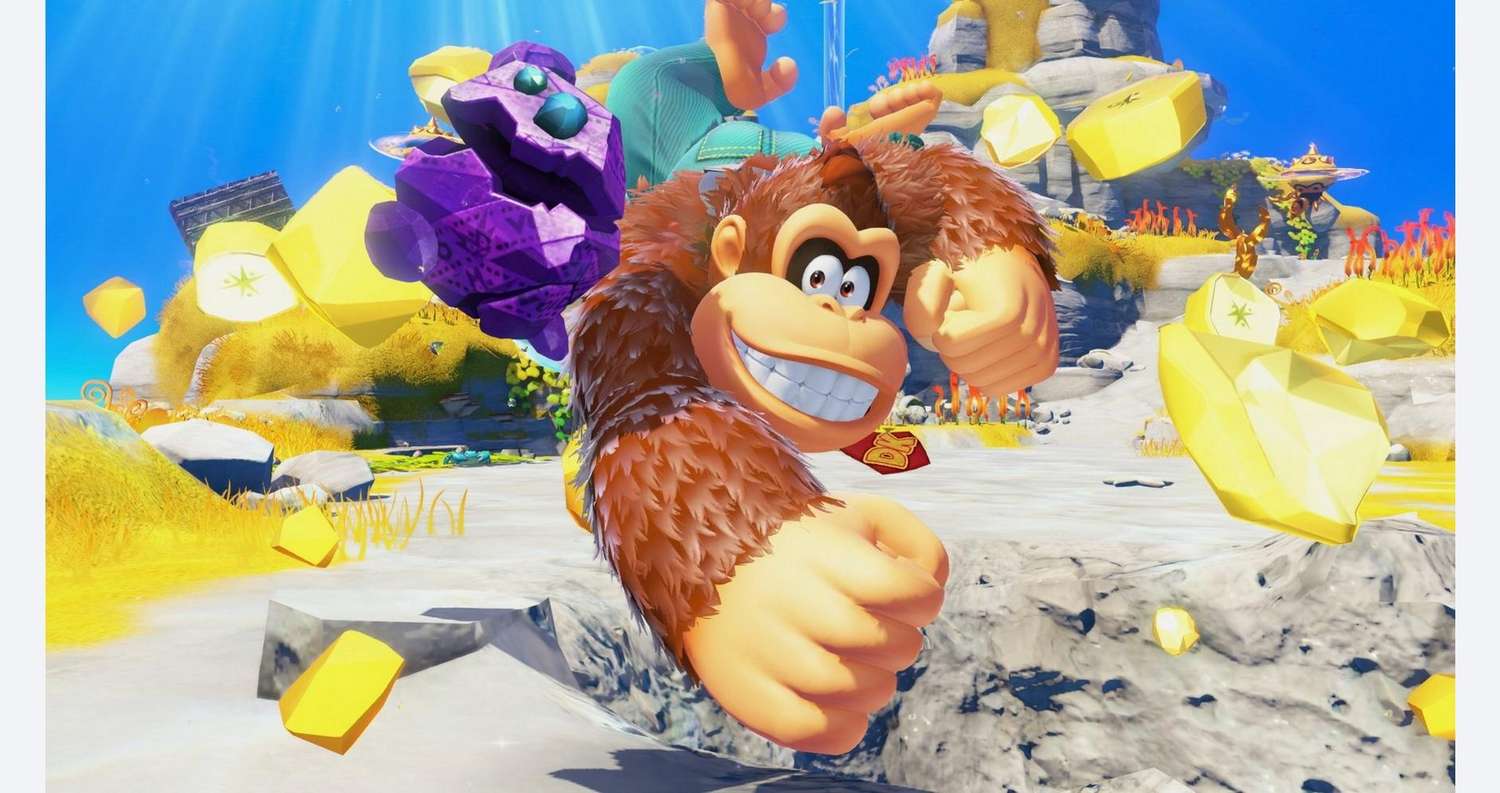 Anticipation for the Nintendo Switch 2: A Generational Leap or Incremental Update?
The anticipation surrounding the Nintendo Switch 2 release date is palpable. Whispers of a console featuring more robust NVIDIA hardware, potentially supporting technologies like DLSS for upscaled 4K output, have fueled dreams of a Nintendo system that can finally stand toe-to-toe with the graphical prowess of Sony’s PlayStation 5 and Microsoft’s Xbox Series X. Gamers are not just hoping for sharper images; they’re demanding a fundamental shift in game performance, expecting fewer compromises in resolution, consistent 60 frames per second in demanding titles, and the ability to run modern third-party games without significant concessions. This includes improved load times, richer particle effects, and more realistic environmental interactions. The Switch 2 is seen as Nintendo’s opportunity to silence critics who point to the original Switch’s aging architecture and its struggle to keep pace with graphically intensive modern titles. A true generational leap is crucial for capturing new audiences and retaining the loyalty of existing ones in a highly competitive video game industry.
The Revelation: Donkey Kong Bananza and the Switch 2’s Latent Performance Achilles’ Heel
The ‘fatal flaw’ unmasked by the Donkey Kong Bananza DLC, particularly when analyzed in the context of the rumored Switch 2, is not necessarily a catastrophic failure of the DLC itself, but rather its inability to deliver a truly groundbreaking, unquestionably ‘next-gen’ experience even on presumably superior hardware. Despite the enhanced graphical options and performance modes available when running on what is understood to be Switch 2 developer kits or early hardware, the DLC struggles to achieve the kind of significant leap that defines a new console generation. Industry insiders and technical analysts observing the enhanced version of Bananza have noted several worrying trends:
- Modest Visual Upgrade: While there are improvements in resolution and texture clarity, the overall aesthetic and complexity of scenes remain largely consistent with the original Switch’s artistic direction, rather than pushing towards a photorealistic or even a significantly more detailed stylized benchmark seen on rival consoles. This suggests a potentially limited bandwidth or processing capacity that prevents more ambitious visual overhauls.
- Inconsistent Frame Rates: Even with increased hardware overhead, reports indicate that complex sections of Bananza, particularly those with numerous on-screen enemies and dynamic environmental effects, still exhibit noticeable dips below a consistent 60 frames per second. This points to a CPU or GPU bottleneck that, even in a highly optimized first-party title, cannot be entirely overcome, hinting at a fundamental limitation of the Switch 2’s core architecture.
- Absence of True Next-Gen Features: Elements commonly associated with current-gen consoles, such as advanced ray tracing, hyper-realistic reflections, or highly dynamic and destructible environments, appear to be either absent or implemented in a severely scaled-back fashion. This could mean the Switch 2’s hardware simply lacks the necessary horsepower for these features, or that Nintendo’s strategic decision leans away from such demanding graphical enhancements.
- Technical Debt and Scalability Concerns: The relatively minor jump in visual fidelity suggests that the Switch 2, despite its upgrades, might still be burdened by a degree of ‘technical debt’ or design choices that prioritize backward compatibility and power efficiency over raw performance. This limits the potential for developers to truly innovate and push graphical boundaries, confining them to a relatively narrow performance corridor. The ease with which Bananza scales between Switch 1 and 2, while a boon for accessibility, also potentially highlights the limited scope of the ‘next-gen’ enhancements, rather than a truly transformative experience.
This reveals an Achilles’ Heel where the Switch 2, while undoubtedly more powerful than its predecessor, might not offer the generational leap consumers expect for their investment. The Bananza DLC, rather than showcasing unbounded potential, exposes a ceiling that feels more like an incremental step than a monumental stride, particularly in an era where consumers are increasingly accustomed to high-fidelity experiences on other platforms.
 Implications for Nintendo’s Strategy and Market Position
Should the Donkey Kong Bananza DLC truly underscore these performance limitations, the implications for Nintendo are significant. First, it could lead to consumer disappointment regarding the value proposition of the Switch 2, particularly if the price point approaches that of more powerful competitors. Second, it might deter third-party developers from investing heavily in creating bespoke, graphically intensive titles for the platform, preferring instead to port existing games with significant visual compromises. This would reinforce the perception that the Switch 2, like its predecessor, remains an ecosystem primarily driven by first-party exclusives and indie titles, struggling to attract AAA multiplatform releases.
Furthermore, this ‘fatal flaw’ could impact Nintendo’s stock performance and long-term competitive strategy. In an increasingly competitive landscape where cloud gaming and subscription services are gaining traction, a console that struggles to deliver modern graphical experiences could find itself marginalized. Nintendo has always championed innovation over brute force, but there comes a point where a lack of technical parity can hinder even the most creative game design, especially for titles seeking to immerse players in vast, detailed worlds.
Conclusion
The Donkey Kong Bananza DLC, a highly anticipated release, inadvertently serves as a stark reminder of the challenges facing the forthcoming Nintendo Switch 2. While the DLC itself promises engaging gameplay, its technical presentation, even on an upgraded console, reveals a latent performance ceiling that might prevent the Switch 2 from delivering the truly next-generational leap many are hoping for. This suggests that Nintendo’s next console may still operate within significant hardware constraints, potentially impacting its appeal to a broader market segment demanding cutting-edge graphics and uncompromised performance. As the Nintendo Switch 2 launch approaches, the industry will be watching closely to see if Nintendo can truly defy technical expectations or if the Bananza DLC has indeed offered an early, unsettling glimpse into its most significant weakness, shaping the future of Nintendo gaming for years to come.